
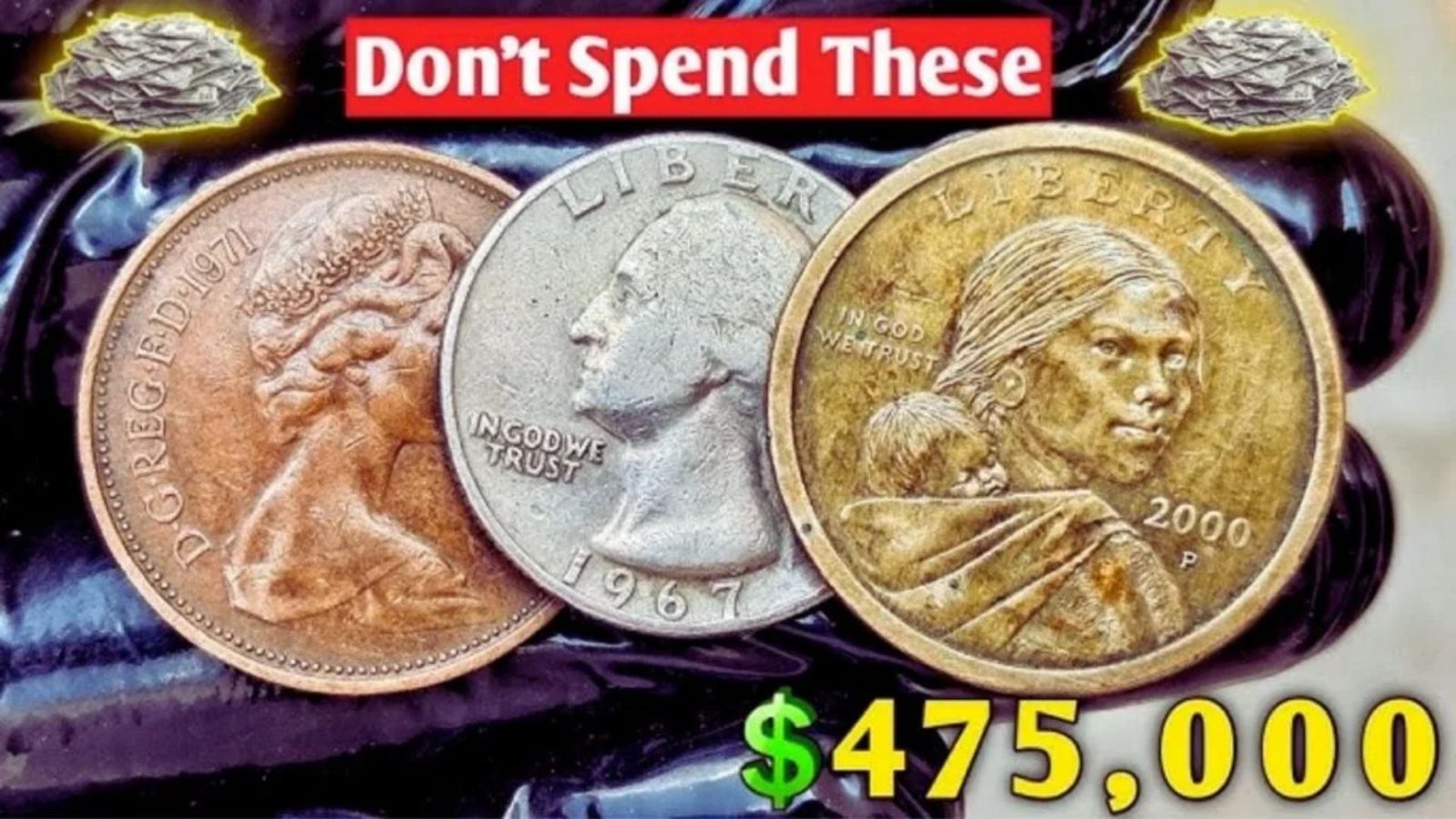
Ever found a coin in your pocket and wondered if it’s worth more than its face value? Some coins are hidden treasures, fetching thousands at auctions! In this post, we’ll explore three ultra-rare coins—the 1971 UK 2p, 2000 Sacagawea Dollar, and 1967 Washington Quarter—that could make you rich. Let’s dive in and uncover their secrets!
What Are Rare Coins?
Rare coins are those special pieces that stand out due to mint errors, low production, or unique features. The 1971 UK 2p, 2000 Sacagawea Dollar, and 1967 Washington Quarter are prime examples. Their scarcity and collector demand drive their value sky-high, making them a dream find for hobbyists.
History of These Valuable Coins
1971 UK 2 New Pence
Introduced in 1971, the UK 2p coin marked the shift to decimal currency. Most are common, but rare proof errors or off-metal strikes, like bronze versions, are prized. These errors happened during early production, making them collector’s gold.
2000-P Sacagawea Dollar
Launched in 2000, the Sacagawea Dollar featured a Native American heroine. The “Cheerios” version, distributed in cereal boxes, had unique tail feather designs. Only a few thousand exist, making them a hot commodity among collectors.
1967 Washington Quarter
Minted during a U.S. coin shortage, 1967 quarters lack mint marks. While most are worth 25 cents, rare silver errors or high-grade specimens (MS68) can fetch thousands. These errors occurred when silver planchets were mistakenly used.
Why These Coins Are Worth Big Money

These coins are valuable due to their rarity and unique features. The 1971 2p’s bronze errors are scarce, with some fetching up to £100,000. The 2000 Sacagawea “Cheerios” Dollar can sell for $25,000–$75,000 in top grades. High-grade 1967 quarters, especially silver errors, can exceed $8,000. Collector demand and auction records keep their value soaring.
| Coin | Key Feature | Estimated Value |
|---|---|---|
| 1971 UK 2p | Bronze error | Up to £100,000 |
| 2000 Sacagawea $1 | Cheerios reverse | $25,000–$75,000 |
| 1967 Quarter | Silver error | Up to $8,812.50 |
How to Spot and Benefit From These Coins
Want to find these treasures? Check your change, old jars, or collections. For the 1971 2p, look for “New Pence” and unusual metal hues. The 2000 Sacagawea needs a “Cheerios” reverse—check the eagle’s tail feathers. For 1967 quarters, weigh them (silver ones are ~6.25g). Sell through reputable dealers or auctions for maximum profit.
Notable Facts and Auction Records
- 1971 UK 2p: A rare bronze error sold for £100,000 due to its unique composition.
- 2000 Sacagawea Dollar: A MS68 Cheerios Dollar fetched $75,000 at auction.
- 1967 Washington Quarter: A flawless MS68 sold for $8,812.50 in 2017.
| Coin | Auction Record | Year Sold |
|---|---|---|
| 1971 UK 2p | £100,000 | Unknown |
| 2000 Sacagawea $1 | $75,000 | Unknown |
| 1967 Quarter | $8,812.50 | 2017 |
Expert Tips for Coin Collectors
- Use a Magnifier: Spot doubled dies or errors with a 10x loupe.
- Check Weight: Silver 1967 quarters weigh more than clad ones.
- Grade Matters: High-grade coins (MS65+) fetch the most.
- Join Communities: Connect with numismatists on forums like Collectors Universe.
- Verify Authenticity: Get coins graded by PCGS or NGC before selling.
FAQs About Rare Coins
Q: Are all 1971 2p coins valuable?
A: No, only rare bronze errors or proof strikes are worth big money.
Q: How do I know if I have a Cheerios Sacagawea Dollar?

A: Look for unique tail feather designs on the eagle’s reverse.
Q: Can 1967 quarters be silver?
A: Yes, rare silver planchet errors exist and are worth thousands.
Q: Where can I sell these coins?
A: Try Heritage Auctions, eBay, or local coin dealers for best results.
Conclusion
The 1971 UK 2p, 2000 Sacagawea Dollar, and 1967 Washington Quarter are more than just pocket change—they’re potential goldmines! With values reaching up to £100,000, these rare coins are worth hunting for. Check your collections, learn to spot errors, and join the coin-collecting community. Share this post, and let us know in the comments if you’ve found a treasure!