
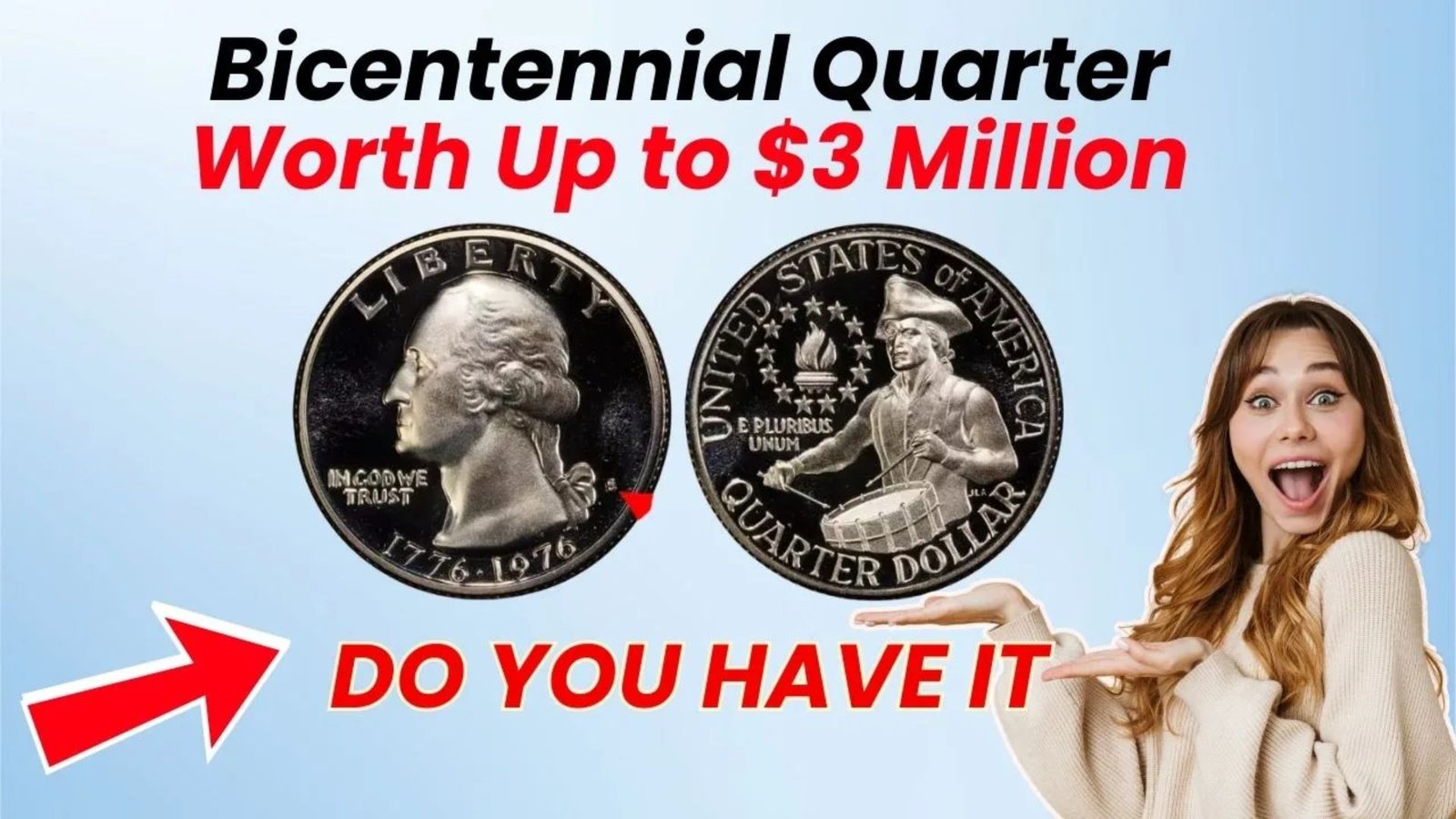
Ever found a quarter in your pocket and wondered if it’s more than just spare change? The 1976 Bicentennial Quarter, minted to celebrate America’s 200th birthday, might be your ticket to a fortune. While most are worth 25 cents, rare versions can fetch up to $3 million! Read on to discover what makes these coins so valuable and how to spot one.
What Is the 1976 Bicentennial Quarter?
The 1976 Bicentennial Quarter is a special coin minted to mark America’s 200th anniversary of independence. Unlike regular quarters, it features a unique design: a colonial drummer on the reverse and a dual date, “1776-1976,” on the obverse. Most are common, but rare varieties can be worth millions.
History and Background
In 1975 and 1976, the U.S. Mint produced over 1.6 billion Bicentennial Quarters to celebrate the Declaration of Independence. These coins, part of the Washington Quarter series, replaced the eagle reverse with a drummer boy and a victory torch encircled by 13 stars, symbolizing the original colonies. They were struck in Philadelphia, Denver, and San Francisco, with varying compositions.
| Mint Location | Mintage | Composition |
|---|---|---|
| Philadelphia | 809,784,016 | 75% copper, 25% nickel (clad) |
| Denver | 860,118,839 | 75% copper, 25% nickel (clad) |
| San Francisco | 22,059,099 | 40% silver (some), clad (others) |
Why Is It So Valuable?
Most Bicentennial Quarters are worth face value, but rare versions stand out due to specific traits. High-grade coins, silver varieties, and those with minting errors like double die obverse (DDO) can fetch thousands or even millions. A 1976-S silver quarter in MS69 sold for $19,200 in 2019
How to Spot a Rare Bicentennial Quarter
Want to find a valuable Bicentennial Quarter? Check these key features:
- Mint Mark: Look for an “S” (San Francisco) on the obverse. Silver quarters from this mint are rarer.
- Condition: High-grade coins (MS67 or above) are scarce and valuable.
- Errors: Look for DDO errors, where design elements appear doubled.
- Material: Silver quarters (40% silver) are worth more than clad ones.

Use a magnifying glass to inspect details and compare with grading resources like PCGS PhotoGrade.
Notable Facts and Records
Here are some jaw-dropping facts about the 1976 Bicentennial Quarter:
- Over 1.6 billion were minted, making them common in circulation.
- A 1976-D clad quarter with a DDO error sold for $8,400 in 2023.
- Silver proof quarters in PR70 DCAM can fetch over $150.
- The highest auction record is $19,200 for a 1976-S silver MS69.
| Coin Type | Highest Auction Price | Year Sold |
|---|---|---|
| 1976-S Silver MS69 | $19,200 | 2019 |
| 1976-D Clad DDO MS68 | $8,400 | 2023 |
| 1976-S Clad Proof PR70 | $920 | 2010 |
Expert Tips for Collectors
Ready to hunt for a rare Bicentennial Quarter? Try these tips:
- Check Your Change: Many quarters are still in circulation.
- Get It Graded: Professional grading by PCGS or NGC boosts value.
- Join Forums: Connect with collectors on numismatic forums for advice.
- Sell Smart: Use eBay for coins under $50; auction houses like Heritage for high-value coins.
Frequently Asked Questions
Q: Are all 1976 Bicentennial Quarters valuable?

A: No, most are worth 25 cents. Only high-grade, silver, or error coins fetch high prices.
Q: How do I know if my quarter is silver?
A: Check for an “S” mint mark and a shinier, heavier feel. Silver quarters contain 40% silver.
Q: Where can I sell a rare quarter?
A: Try eBay for lower-value coins or auction houses for high-value ones.
Conclusion
The 1976 Bicentennial Quarter is more than just pocket change—it’s a piece of American history with the potential for massive value. By checking mint marks, condition, and errors, you might uncover a rare gem worth thousands or even millions. Start hunting, share this post, or join a coin-collecting community to learn more!